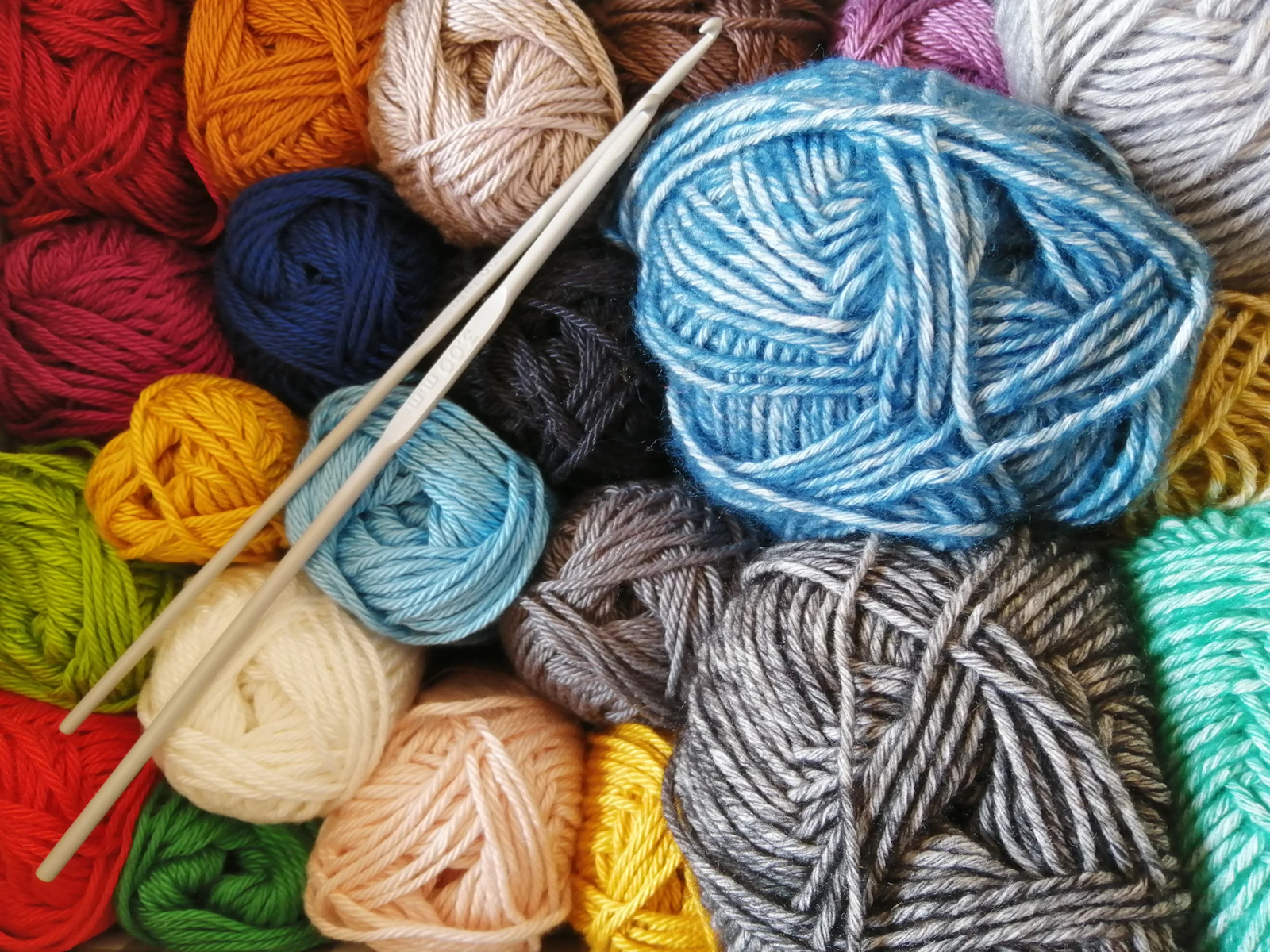


UK and US yarn names
UK patterns usually say 4-ply, double knit (DK), aran and chunky. US patterns say fingering, light worsted (DK), worsted (close to aran) and bulky. Always check the recommended needle size and tension (gauge) on the ball band rather than relying on the name.
Yarn weights at a glance
| UK name | US name | Typical needles | Good for |
|---|---|---|---|
| Lace / 2-ply | Lace | 1.5–2.25mm | Shawls, fine lace |
| 4-ply | Fingering | 2.75–3.25mm | Socks, baby clothes |
| Double knit (DK) | Light worsted | 3.75–4mm | Jumpers, hats |
| Aran | Worsted | 4.5–5mm | Cables, winter knits |
| Chunky | Bulky | 6–8mm | Quick, cosy knits |
| Super chunky | Super bulky | 9mm+ | Blankets, statement pieces |
Ranges are typical; always follow the ball band and your pattern.
Fibres
- Wool: warm, elastic and breathable. Superwash wool can be machine washed.
- Cotton: cool and crisp, good for summer tops and dishcloths, but less stretchy.
- Acrylic: affordable and easy care, popular for blankets and children’s wear.
- Blends: wool with nylon is the classic for hard-wearing socks.
From hand knitting to hosiery
Hand knitting and machine knitting share a history. The stocking frame, invented in 1589, started an industry that made the East Midlands the home of British hosiery. Read about Leicester’s hosiery heritage.
British wool and Leicester sheep
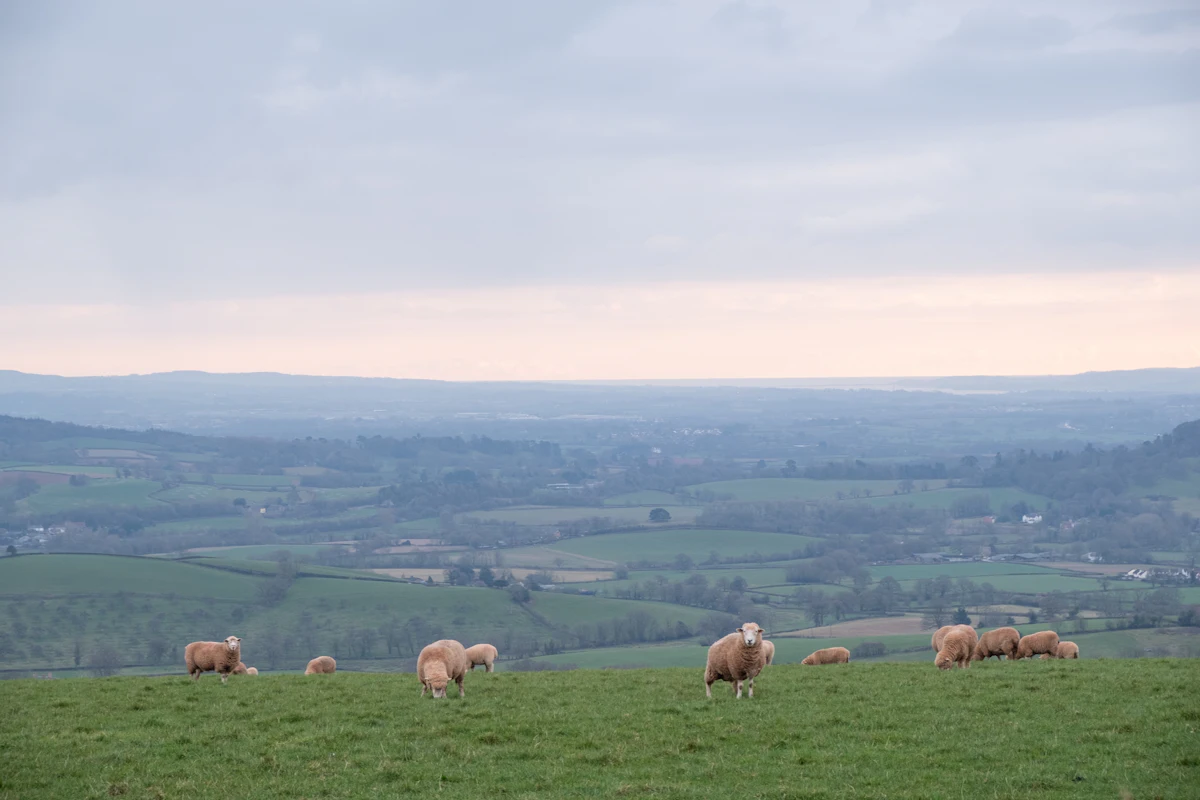
Two famous breeds carry the county’s name. The Leicester Longwool was developed by Robert Bakewell at Dishley, near Loughborough, in the 18th century, and the Bluefaced Leicester is prized for fine, lustrous wool. Read Leicester sheep and British wool.
Caring for wool
- Follow the ball band: many wools are hand wash only unless marked superwash.
- Wash cool, don’t wring, and dry flat.
- Store clean knits with cedar or lavender to deter moths.
Last updated: 14 October 2026


