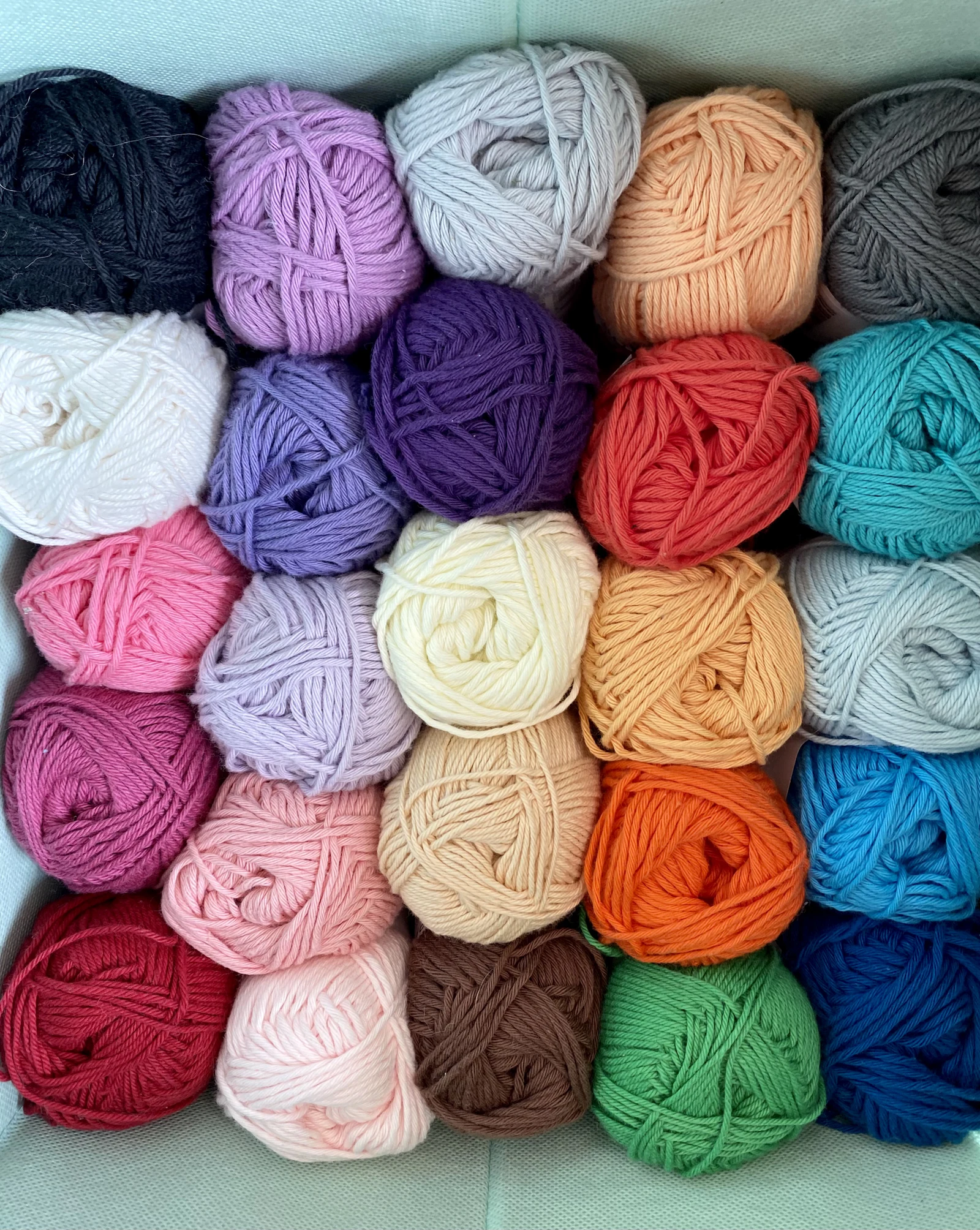
The main UK weights
- 4-ply (US fingering): socks, baby wear, fine knits. Around 2.75 to 3.25mm needles.
- Double knit / DK (US light worsted): the all-rounder. Around 4mm needles.
- Aran (close to US worsted): cables and warm jumpers. Around 4.5 to 5mm needles.
- Chunky (US bulky): quick, cosy projects. Around 6 to 8mm needles.
Needle sizes are typical ranges; always follow the ball band and your pattern.
Read the ball band
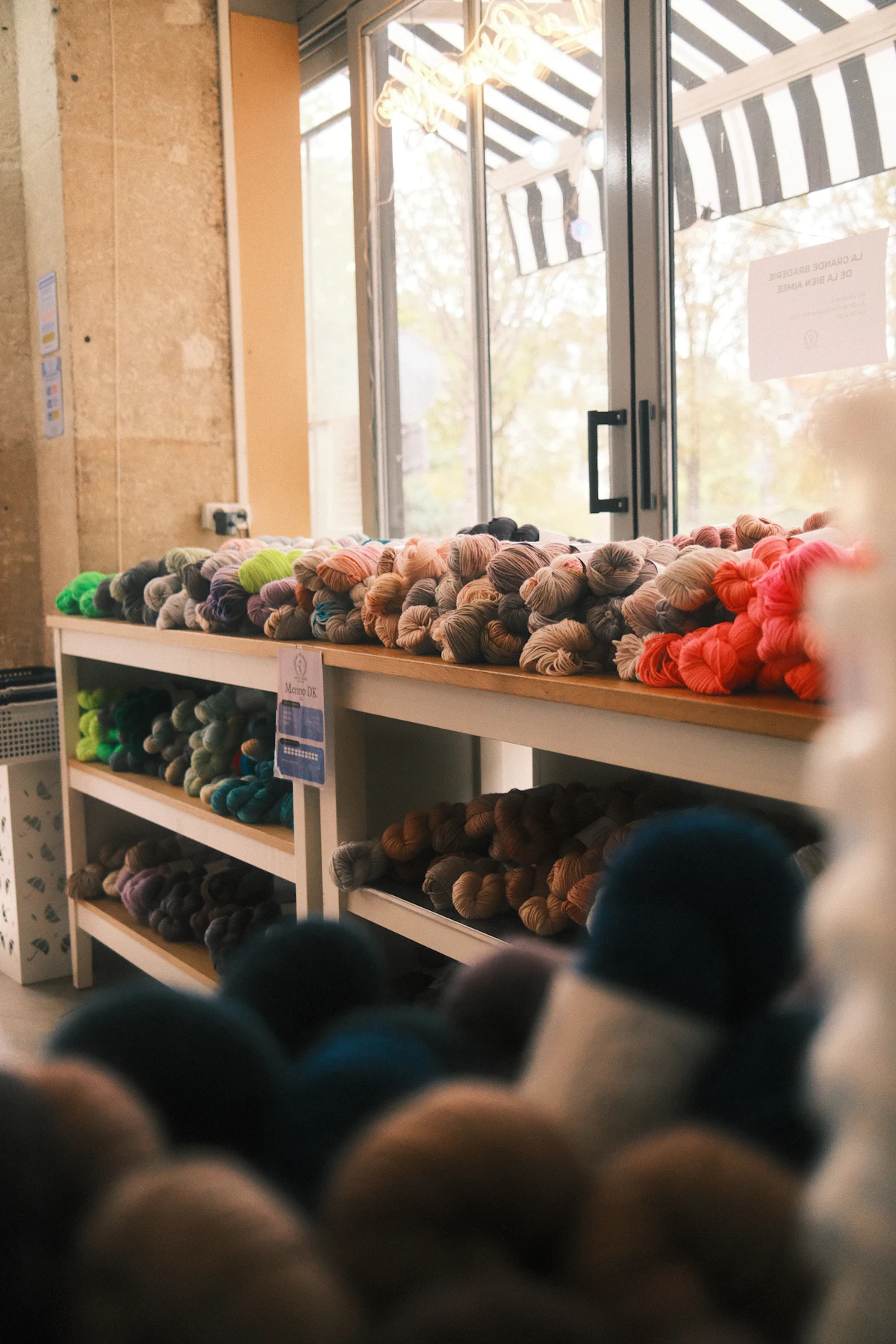
The band shows fibre content, weight, length, recommended needle size, tension (stitches and rows per 10cm) and washing instructions. Buy enough from the same dye lot for the whole project.
Knit a tension square
Knit a 10cm square before you start. If you have more stitches than the pattern, go up a needle size; fewer, go down.
Substituting yarn
If a pattern’s yarn is discontinued, match the weight, the tension and the metres per 100g as closely as possible, then knit a tension square. Similar fibre content keeps the drape and warmth closer to the original.
Wraps per inch
If a yarn has lost its ball band, wrap it around a ruler for one inch without stretching or overlapping and count the wraps. Fewer wraps means a thicker yarn. Compare with a wraps-per-inch chart to estimate the weight.
Fibre and drape
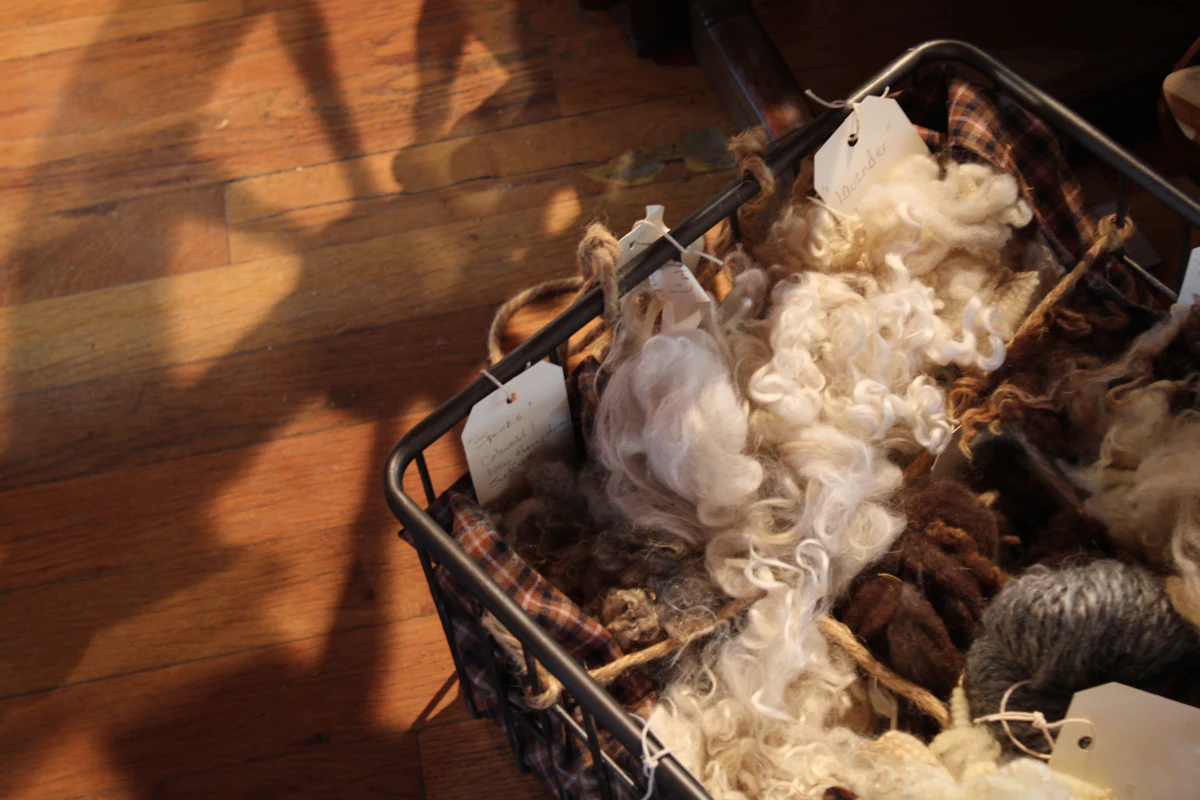
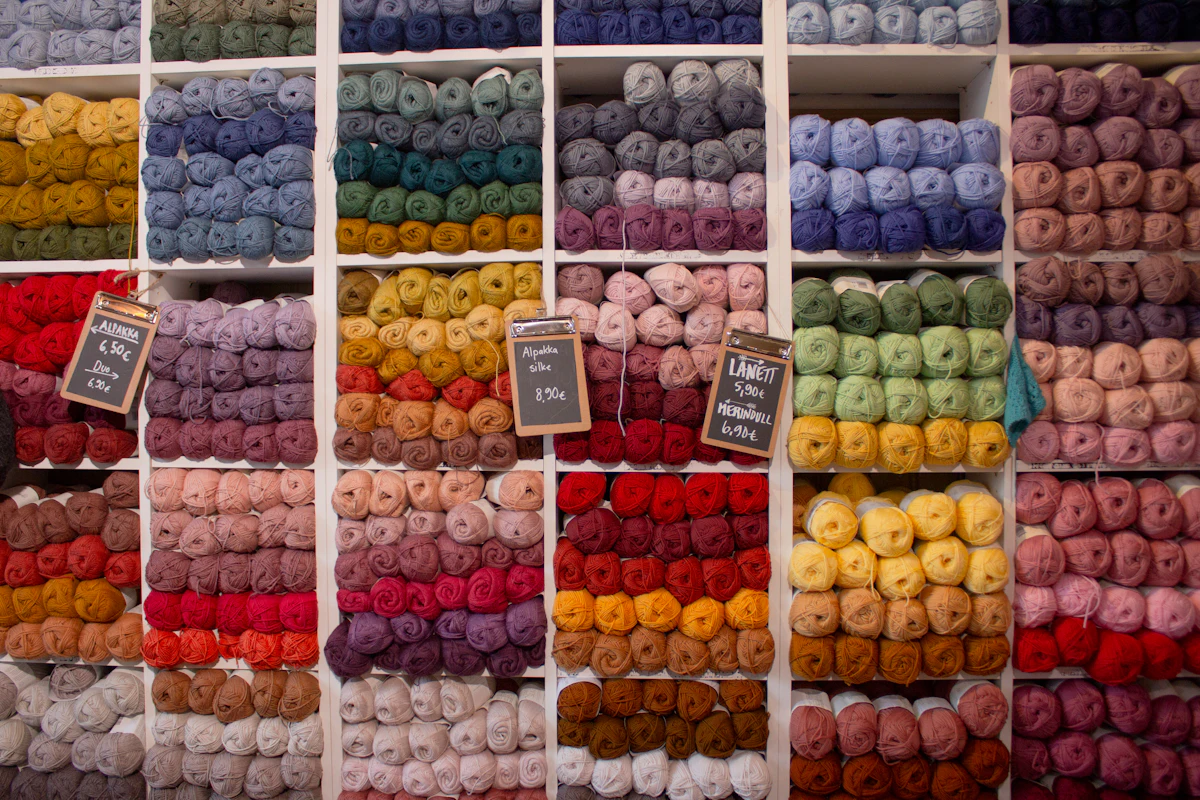
Two yarns of the same weight can knit up very differently. Wool is springy and holds cables crisply, cotton is heavier and drapes, alpaca is warm and has a halo, and acrylic is light and easy care. Swatch to see the fabric before committing to a big project.
How much yarn will I need?
Patterns give yardage or metres per size. If you substitute yarn, work out total metres needed and divide by metres per ball. Buy one extra ball from the same dye lot for safety.
From wool to hosiery
Sock yarns, often wool blended with nylon for strength, are a direct link to the East Midlands hosiery tradition. Read Leicester’s hosiery heritage. And if you sew as well as knit, PK Sewing Machines in Leicester can service your machine. See our wool and yarn guide.
Last updated: 14 October 2026


