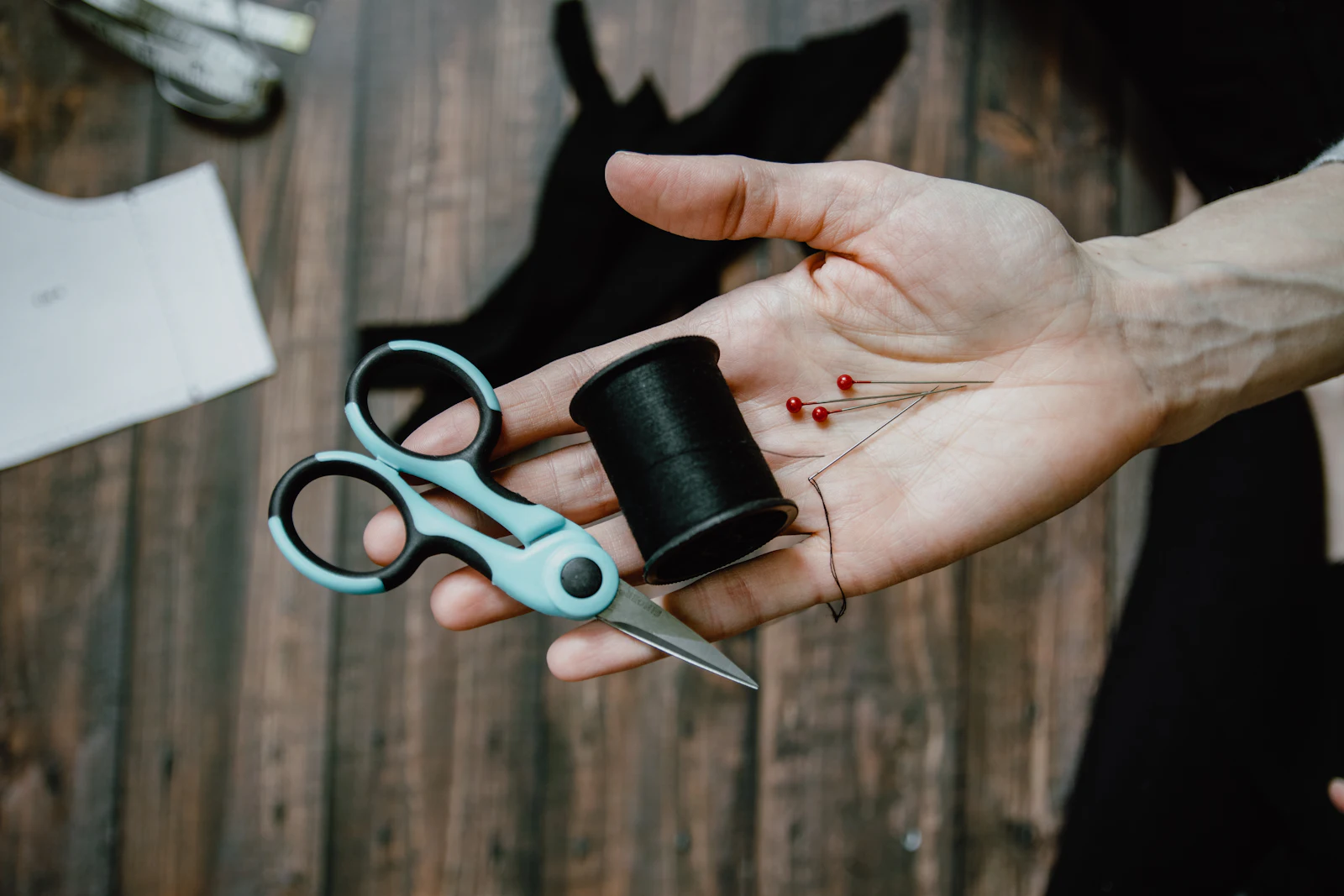
Before you start
- Raise the needle to its highest point using the handwheel.
- Raise the presser foot: this opens the tension discs so the thread seats properly.
- Use good-quality thread and a new needle.
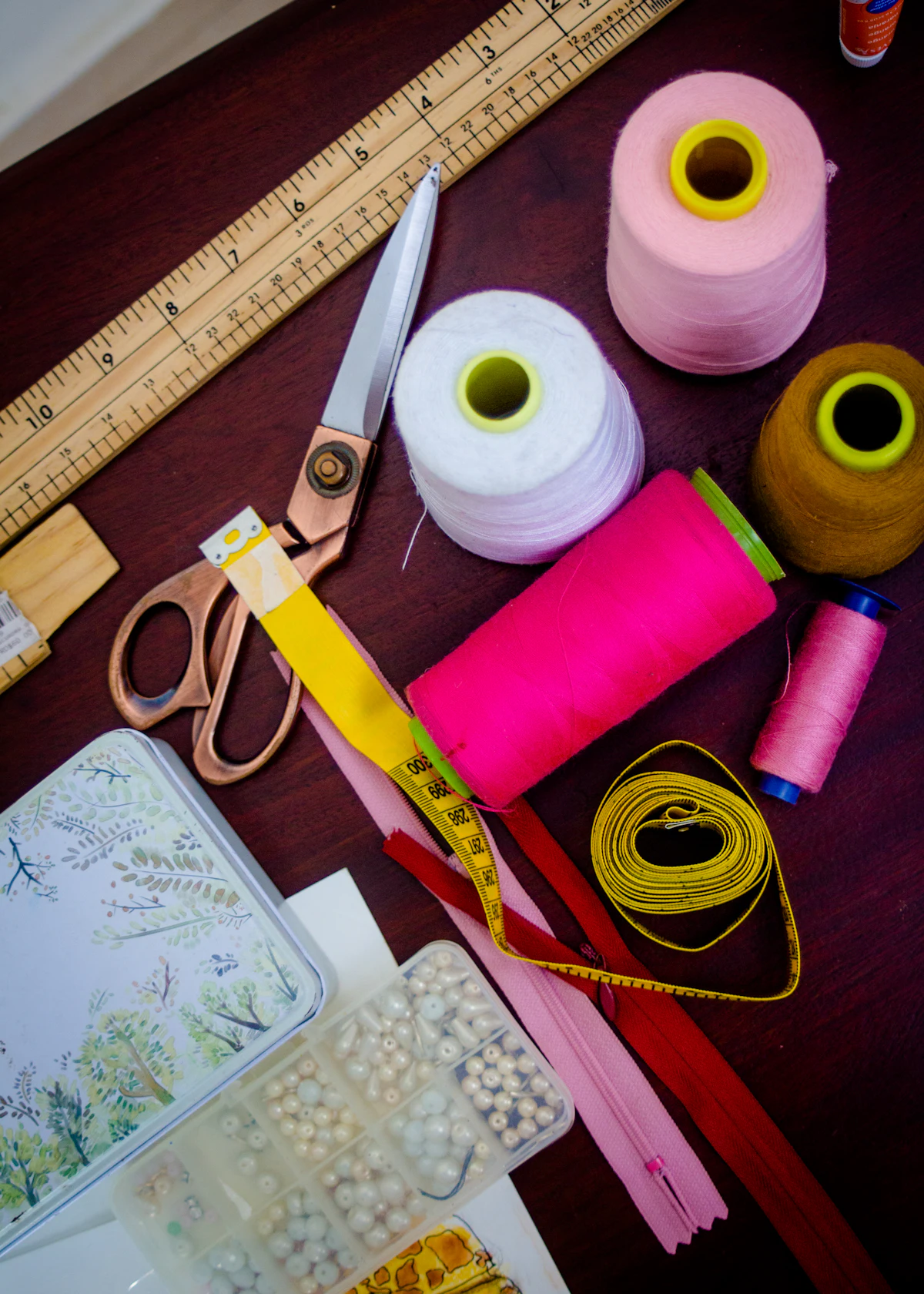
Threading the top
- Place the spool on the pin with a spool cap.
- Take the thread through the first thread guide.
- Pull it down the channel, round the U-turn and up through the take-up lever.
- Bring it down through the lower guides above the needle.
- Thread the needle front to back (or use the automatic threader).
Winding and inserting the bobbin
Wind the bobbin through the winder tension guide, then insert it into the case or drop-in holder in the direction shown in your manual. Pull the thread through the tension slot.
Bringing up the bobbin thread
Hold the top thread, turn the handwheel towards you one full turn, and pull the top thread to bring up a loop of bobbin thread. Pull both threads behind the foot.
Using the automatic needle threader
Lower the needle threader lever, hook the thread around the guide, then release. A small hook pulls a loop through the eye. It works best with a standard needle and all-purpose thread; very thick threads or twin needles may need threading by hand.
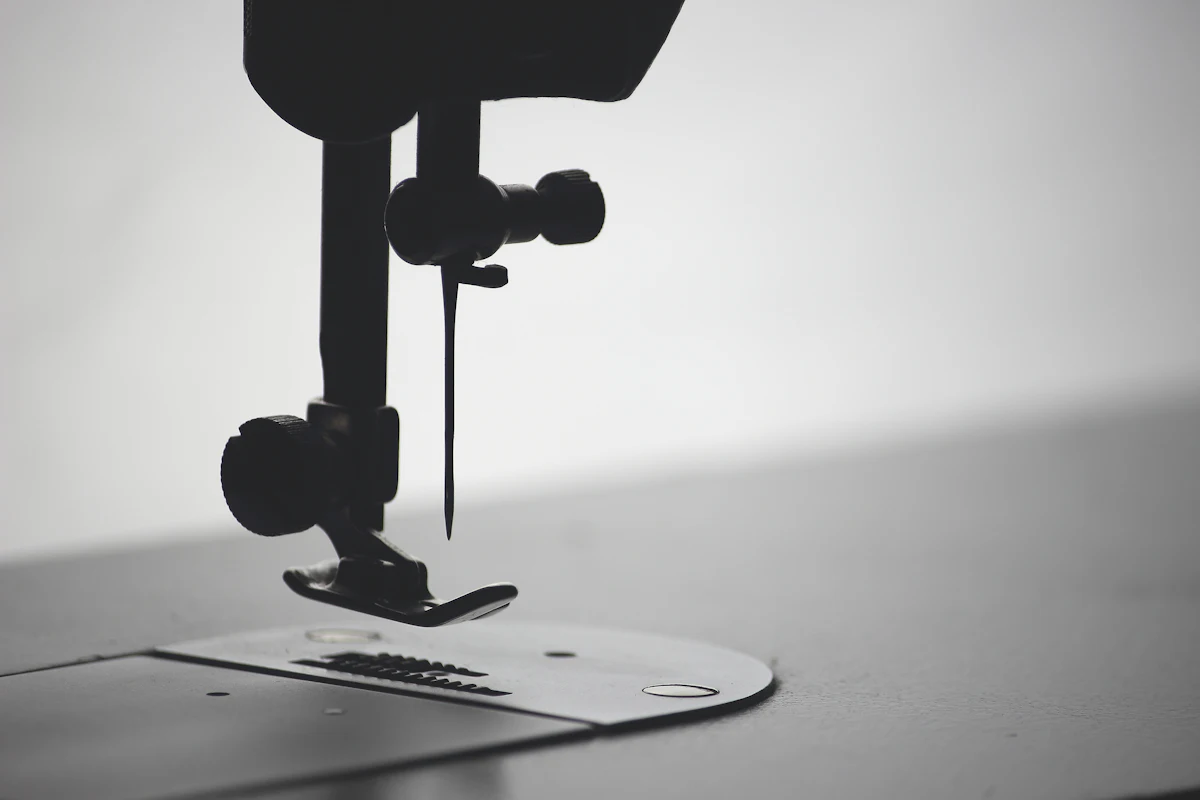
Threading industrial and vintage machines
Industrial and older machines follow the same principle but the path can differ, and some needles are threaded from left to right. Follow the threading diagram for your model.
Threading an overlocker
Overlockers have separate paths for each looper and needle, usually colour-coded on the machine. Most are threaded upper looper, lower looper, then needles; check your manual. Changing colour? Tie the new thread to the old with a small knot and pull it through gently.
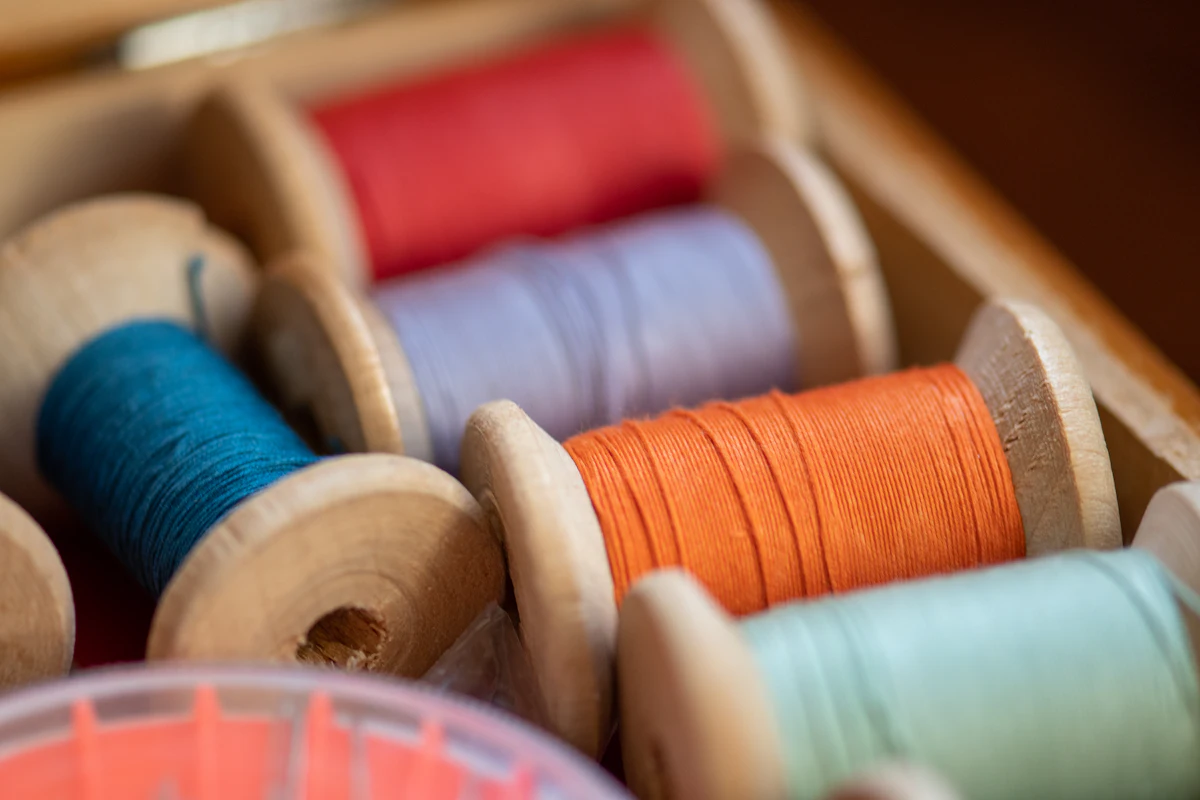
Thread quality matters
Cheap thread can be uneven, shed lint and break. A good all-purpose polyester thread suits most sewing; use cotton for quilting if you prefer, and specialist threads for topstitching and embroidery.
Still having trouble?
See common problems and tension. If your machine still misbehaves, PK Sewing Machines in Leicester can service it; the city has fixed machines since its hosiery heyday.
Last updated: 14 October 2026


