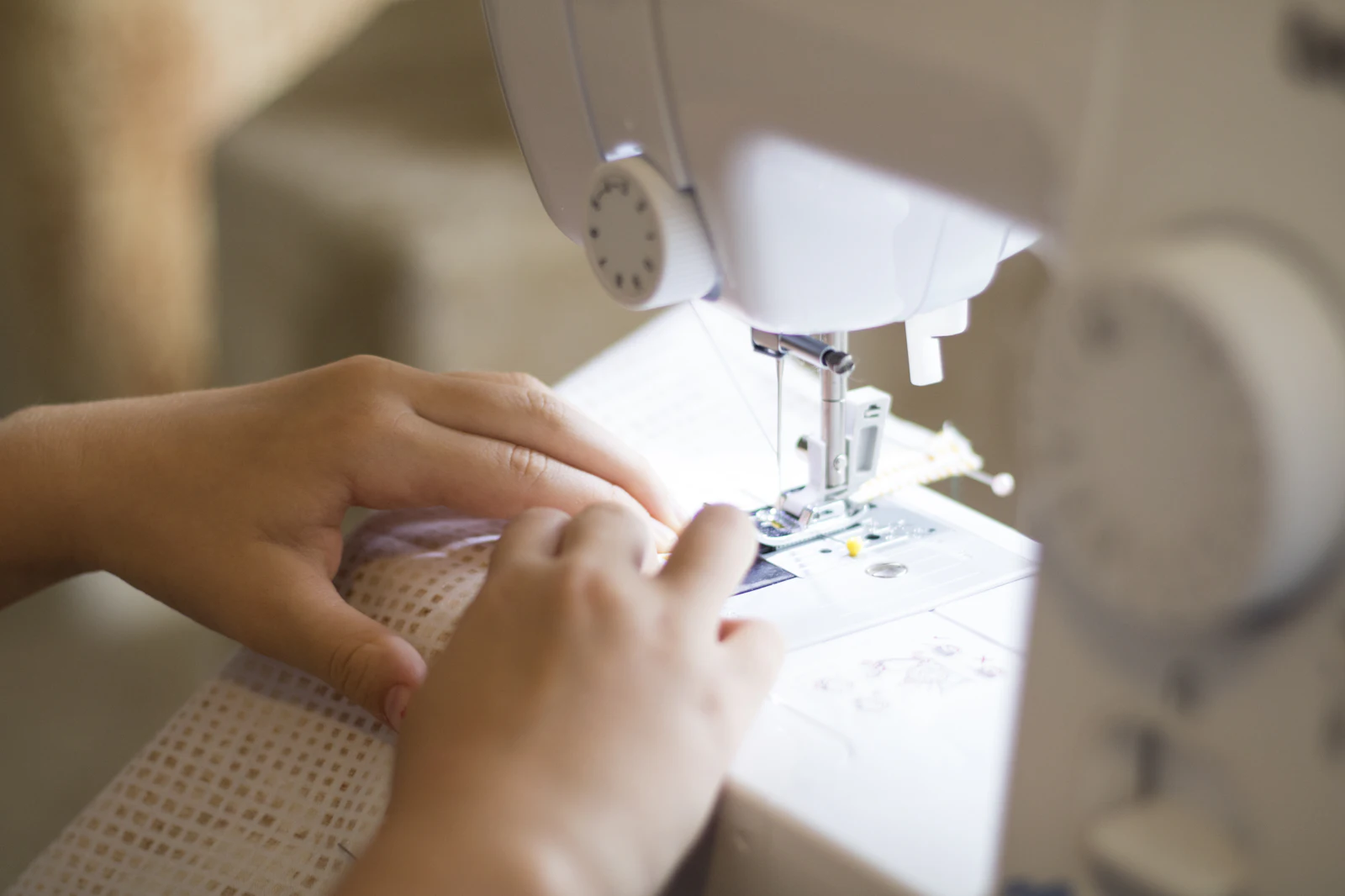
What a balanced stitch looks like
In a balanced lockstitch, the two threads interlock in the middle of the fabric layers. You see only top thread on top and only bobbin thread underneath. Use contrasting colours on a test scrap to check.
Rethread first
Most “tension problems” are threading problems. Raise the presser foot (which opens the tension discs) and rethread the top completely. Check the bobbin is inserted the right way round.
Adjusting top tension
- Top thread visible underneath: increase top tension a little.
- Bobbin thread visible on top: decrease top tension a little.
- Change one step at a time and test.
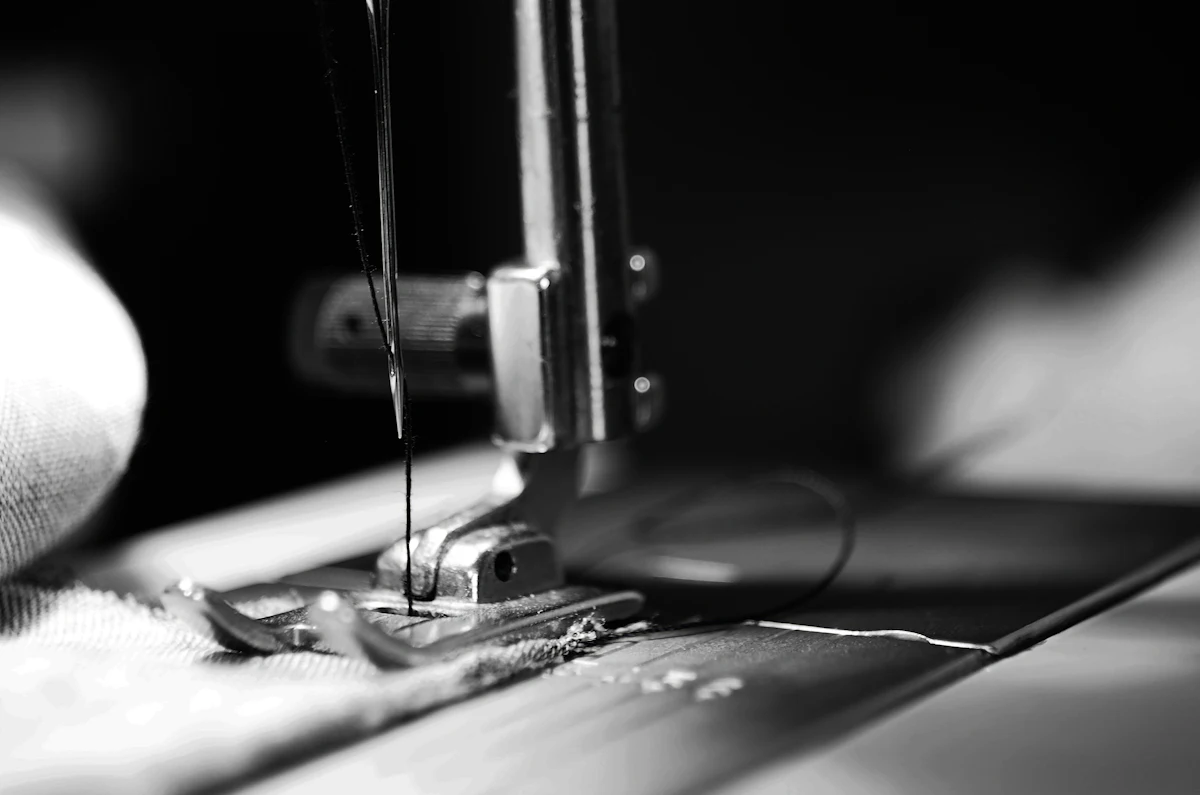
Bobbin tension
On front-loading machines the bobbin case has a small screw. Adjust only in tiny turns, and only if top tension changes don’t help. Many drop-in systems shouldn’t be adjusted at home.
Fabric and thread matter
Heavy thread, thick layers and stretch fabrics all change how tension behaves. Match needle size to thread and fabric, and test on the actual fabric you are sewing.
A tension test you can repeat
- Thread a different colour on top and in the bobbin.
- Sew a line of straight stitch and a line of zigzag on two layers of medium cotton.
- Check both sides. Adjust the top dial one step and sew again.
- Note the best setting for that fabric.
Tension on industrial machines
Industrial machines have a similar top tension assembly and a bobbin case with a tension spring. Operators often set bobbin tension by the “drop test”, but follow the manufacturer’s guidance or ask your engineer.
When to call a professional
If tension won’t balance after rethreading, a new needle and small adjustments, the machine may need a service. PK Sewing Machines in Leicester services all major makes. Leicester’s engineers have kept machines running since the days of the great hosiery mills.
Last updated: 14 October 2026


