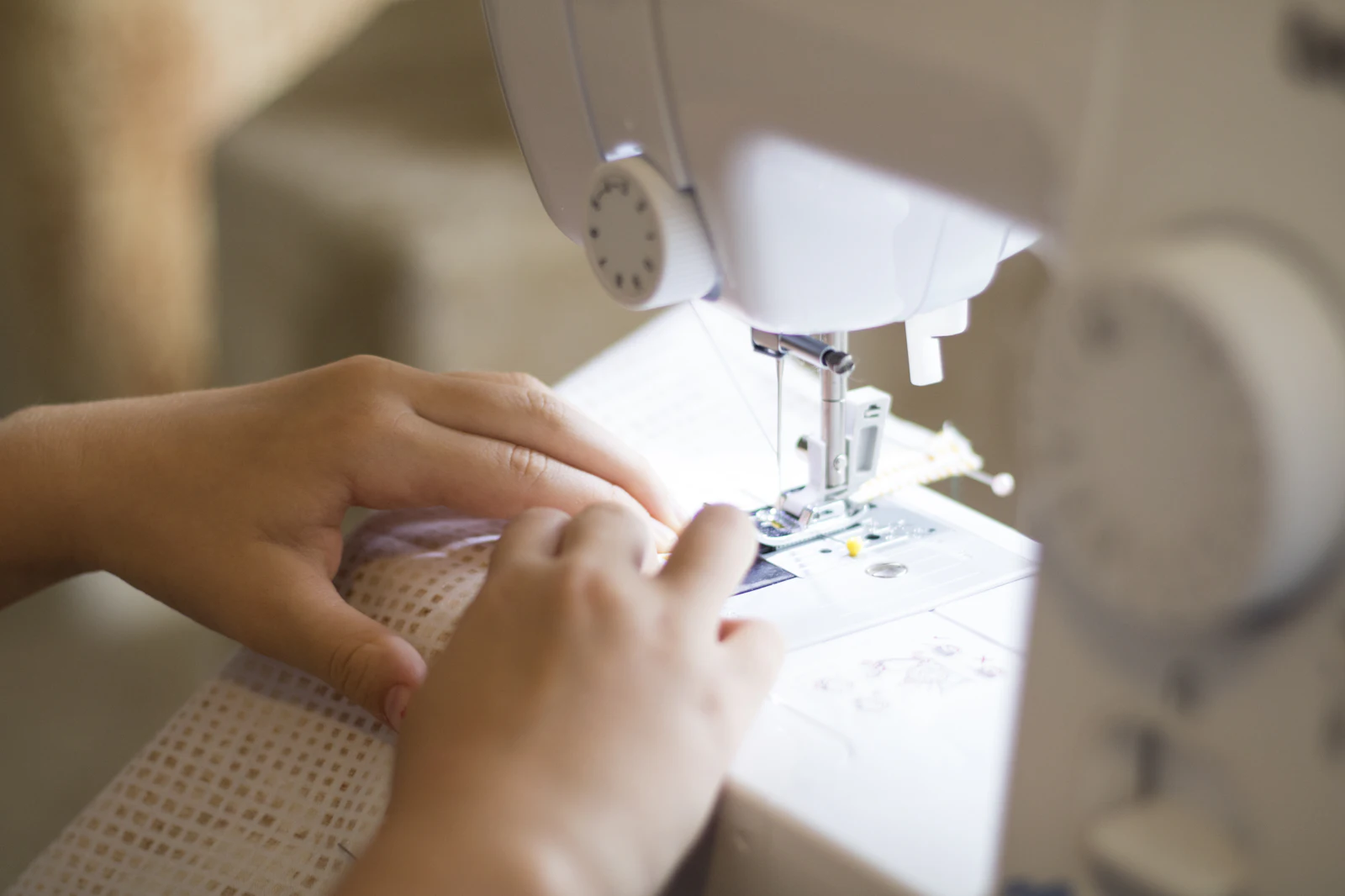
What an overlocker does
An overlocker sews the seam, trims the edge and wraps it in thread in one go. It is ideal for jersey and stretch fabrics, and for neatening woven seams so they don’t fray.
3-thread vs 4-thread
A 4-thread overlock adds a second needle line for strength, and is the usual choice for seams on knits. A 3-thread overlock is lighter and good for neatening edges.
Differential feed
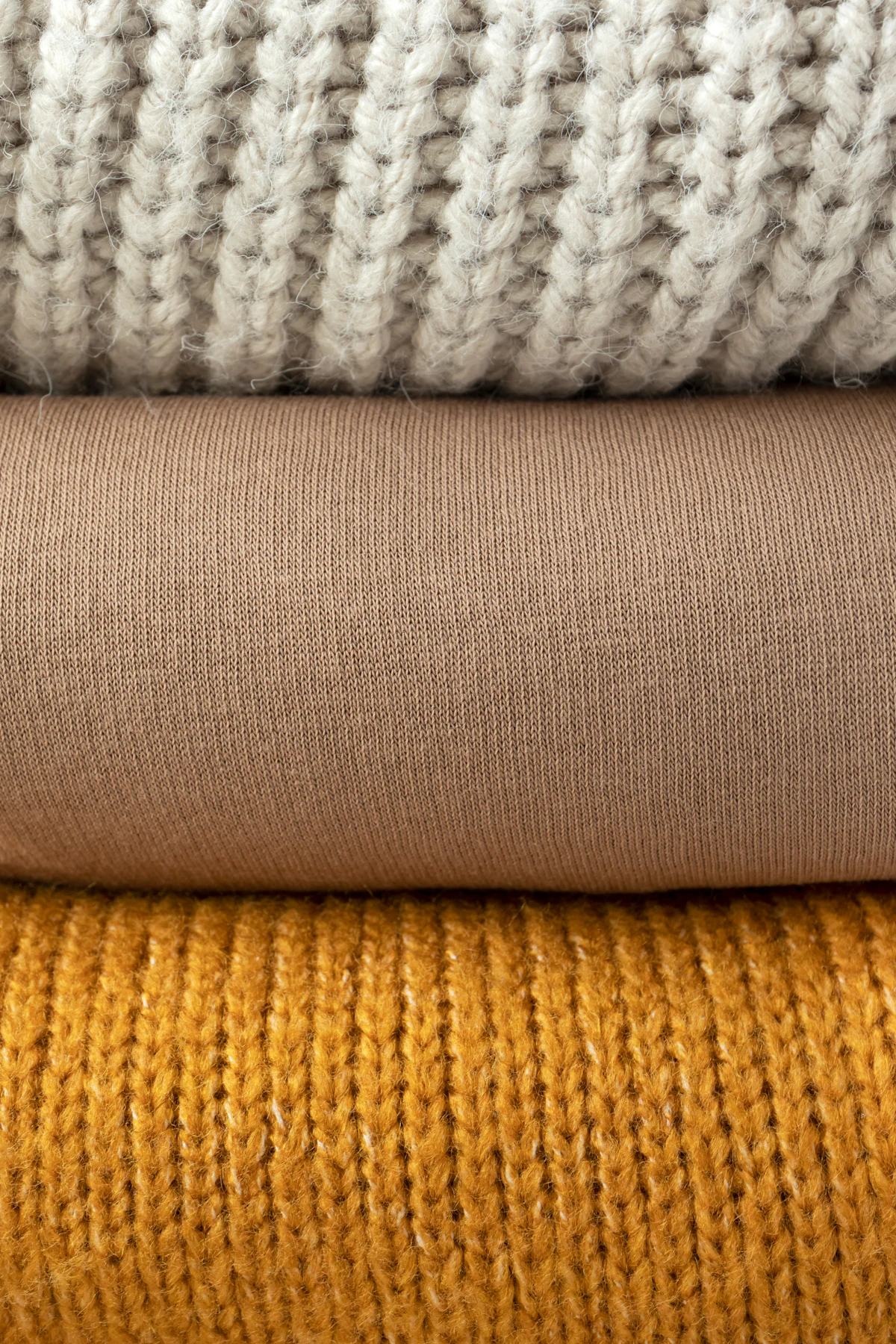
Two sets of feed dogs move at different speeds. Increase it to stop knits stretching into a wave; decrease it to stop fine fabrics puckering. Test on a scrap first.
Threading order matters
Most machines thread the upper looper, then the lower looper, then the needles, but follow the colour-coded guide on yours. The tie-on method (knotting new thread to old and pulling through) saves time.
Common mistakes
- Sewing over pins, which damages the knives.
- Forgetting to raise the presser foot when threading.
- Using the wrong needle system (many overlockers use specific needles).
Your first practice session
- Thread the machine in four different colours so you can see which thread does what.
- Sew on scraps of jersey and woven cotton.
- Adjust one tension dial at a time and watch the change.
- Practise curves and outside corners.
- Try a rolled hem if your machine offers one.
Tension on an overlocker
Each thread has its own tension dial. A balanced 4-thread overlock shows the upper looper thread on top, the lower looper thread underneath, and the needle threads as straight lines. If loops hang off the edge, tighten that looper slightly; if the fabric puckers, loosen.
Cutting width and stitch length
The knife trims the edge as you sew. Adjust the cutting width so the stitches wrap the edge neatly without rolling it. A longer stitch suits thicker fabrics, a shorter one gives a denser finish on fine fabrics.
Looking after an overlocker
Overlockers produce lots of lint. Brush them out after every project, change needles regularly (using the type the manual specifies) and replace the knife if it starts chewing fabric. Service it as you would a sewing machine.
Help in Leicester
Overlock and coverstitch machines are the workhorses of Leicester’s knitwear trade. PK Sewing Machines sells and services domestic and industrial overlockers. See our overlocker guide.
Last updated: 14 October 2026


