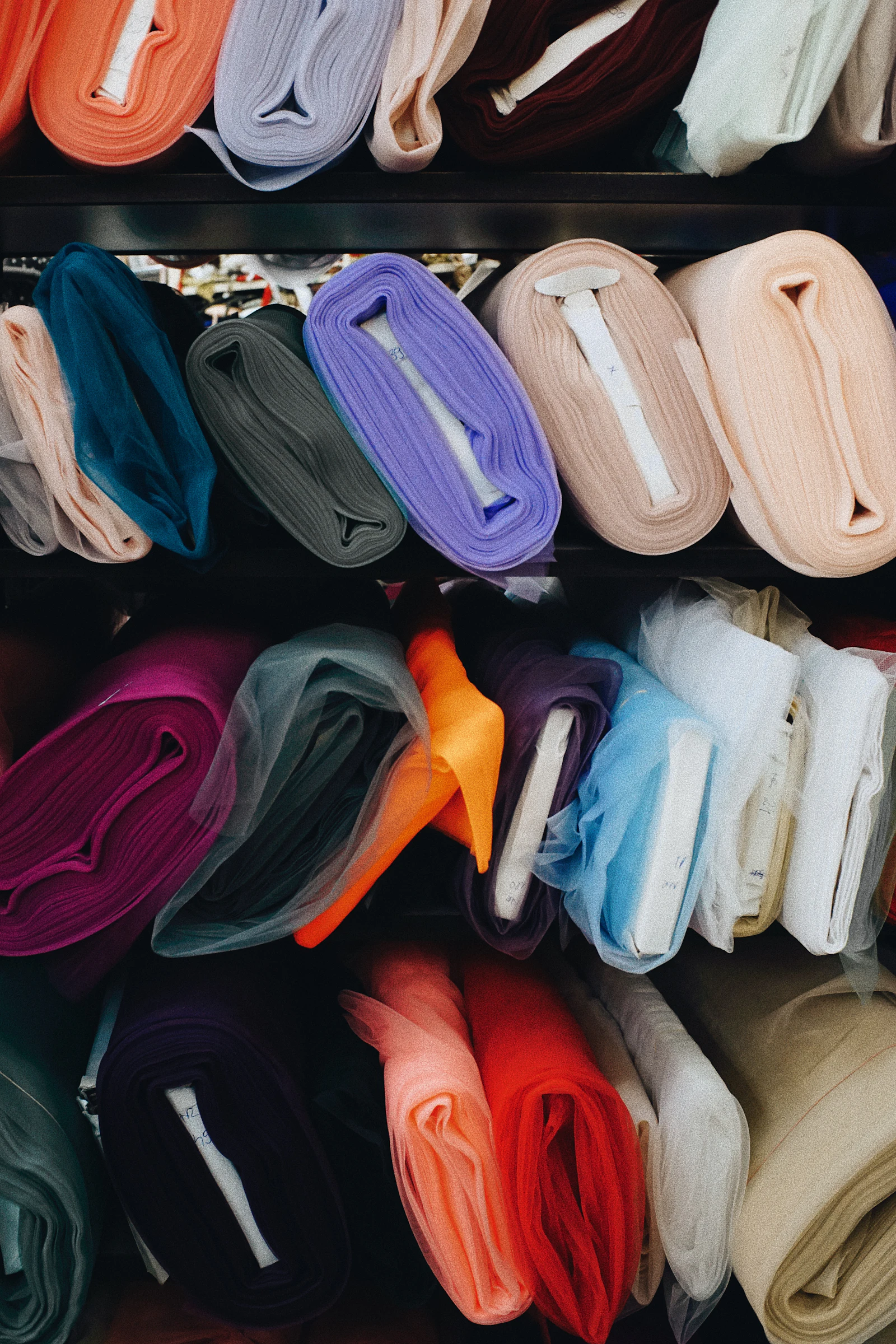


Before you buy
- Check the pattern’s suggested fabrics and the amount needed for your size and the fabric width.
- Feel the drape: does it hang or hold its shape?
- Check the fibre content and care label.
- Pre-wash washable fabrics before cutting to avoid shrinkage later.
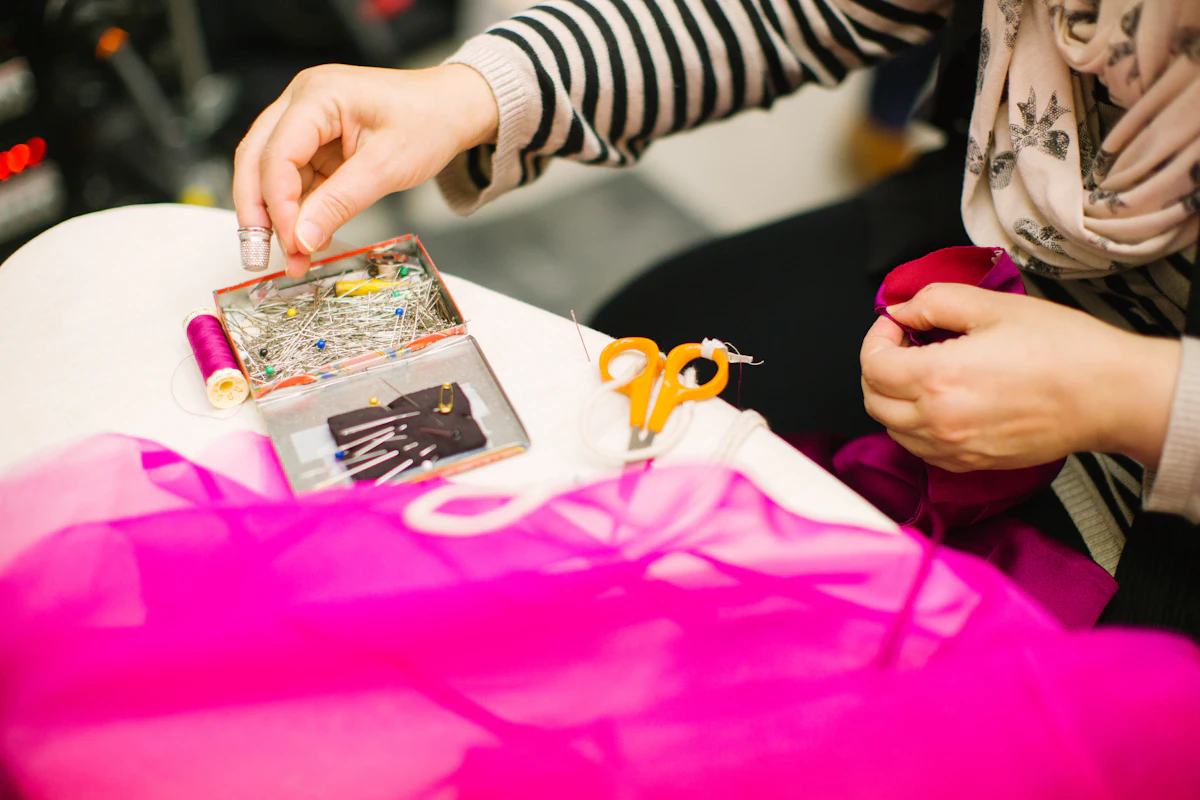
Cotton
Quilting cotton, poplin, lawn and chambray are the friendliest fabrics for beginners. Use a universal needle (80/12), all-purpose thread and a medium stitch length.
Linen
Linen is strong, breathable and frays readily, so neaten seams with an overlocker, zigzag or French seams. It presses crisply with steam.
Jersey and knits
Knits stretch, so use a ballpoint or stretch needle, a narrow zigzag or stretch stitch (or an overlocker), and don’t pull the fabric. A walking foot helps prevent wavy seams.
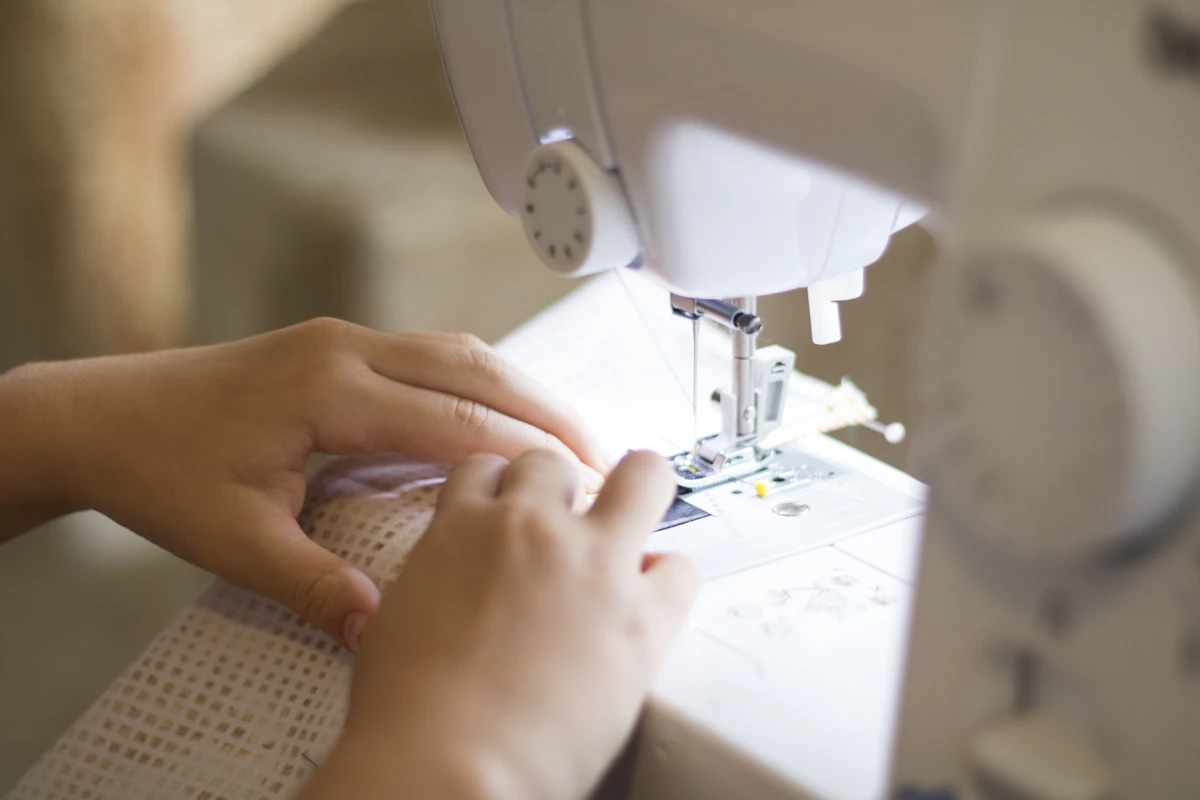
Denim and heavy fabrics
Use a jeans needle (90/14 to 100/16), a longer stitch, and sew slowly over thick seams. A hump jumper or folded scrap helps the foot climb over bulky hems. Heavy-duty or industrial machines make light work of it.
Silk and satin
Use a fine sharp needle, fine pins in the seam allowance and a short stitch. Tissue paper under the seam stops slippage and can be torn away afterwards.
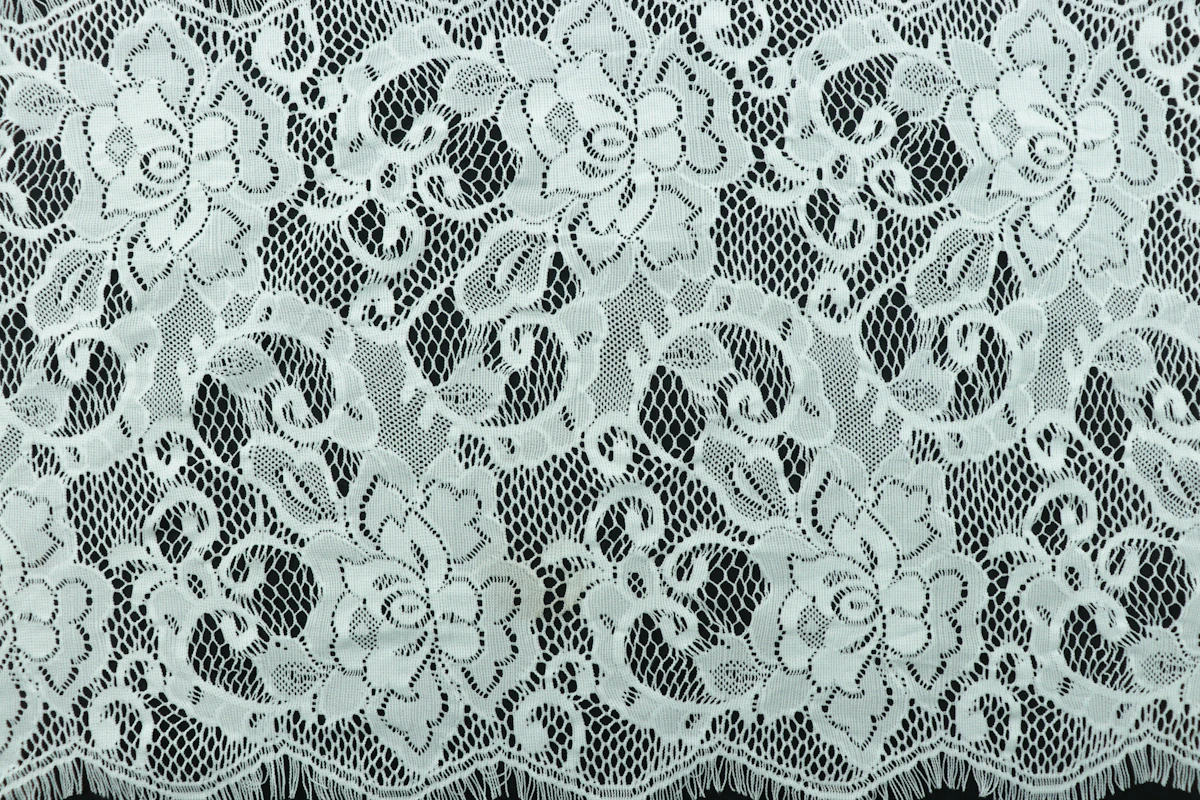
Lace and specialist fabrics
Lace, velvet, sequins and faux leather all have their own tricks: a non-stick or walking foot, sharp new needles and plenty of testing on scraps.
Getting your machine ready
A freshly serviced machine with a new needle handles every fabric better. If you are in Leicestershire, PK Sewing Machines services domestic and industrial machines. Leicester itself, with its textile heritage, is a great place to shop for fabric.
Last updated: 14 October 2026


