Needle systems
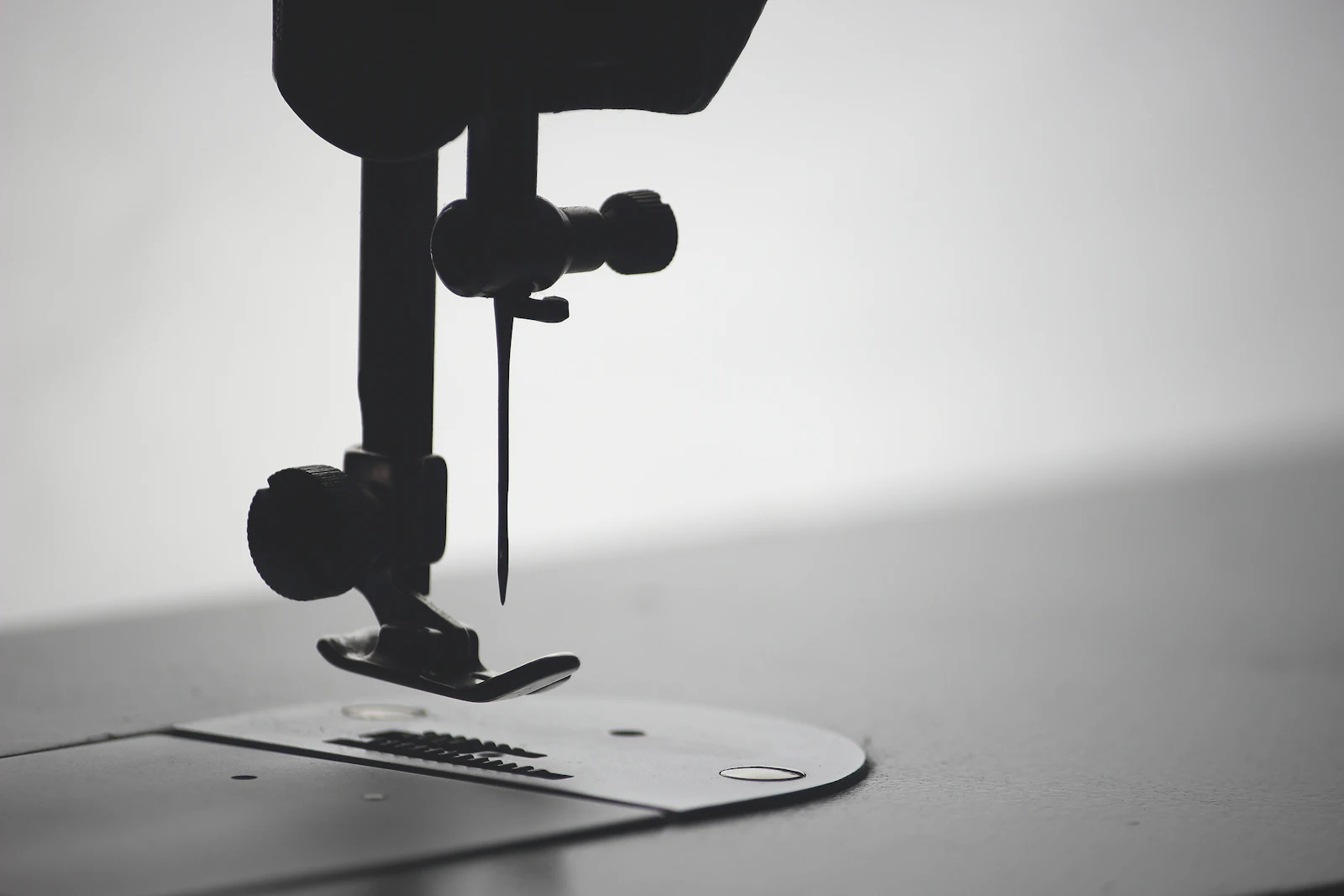
The system is the needle’s shape and length, and it must match your machine. Most domestic machines use 130/705H (also called 15x1 or HAx1) with a flat shank. Industrial machines use round-shank systems such as DBx1 (many lockstitch machines) or DCx27 (many overlockers). Check your manual.
Sizes
Sizes are shown as metric/imperial, such as 70/10, 80/12, 90/14, 100/16. Lower numbers are finer. Use fine needles for silk and lawn, mid sizes for cotton, and heavier sizes for denim and canvas.
Point types
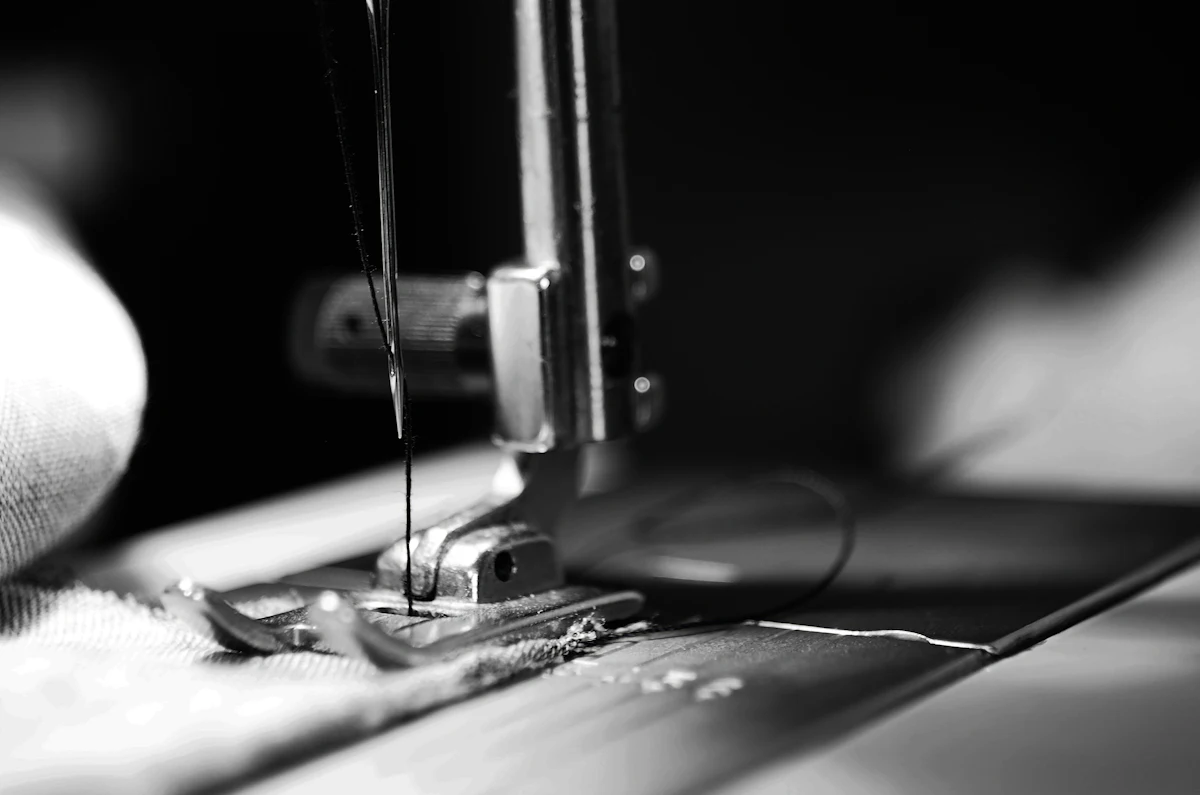
- Universal: everyday wovens and some knits.
- Ballpoint / jersey: pushes between knit fibres instead of piercing them.
- Stretch: for very elastic fabrics and swimwear.
- Jeans / denim: sharp and strong for dense weaves.
- Leather: a cutting point, for leather only.
- Embroidery and metallic: larger eyes to protect delicate threads.
When to change
Change the needle every project or after several hours of sewing, and immediately if it hits a pin. A blunt needle causes skipped stitches and snagged fabric.
Quick needle chart
| Fabric | Needle type | Typical size |
|---|---|---|
| Silk, chiffon, lawn | Microtex / sharp | 60/8–70/10 |
| Cotton, poplin, linen | Universal | 80/12–90/14 |
| Jersey, T-shirt knits | Ballpoint / jersey | 70/10–90/14 |
| Swimwear, lycra | Stretch | 75/11–90/14 |
| Denim, canvas | Jeans | 90/14–110/18 |
| Leather | Leather (cutting point) | 90/14–110/18 |
Sizes are a guide; test on a scrap first.
Twin needles and topstitching
Twin (double) needles sew two parallel rows, great for hems on knits when you don’t have a coverstitch machine. They only work on machines with a zigzag and a front-to-back needle hole. Topstitch needles have a larger eye for thick decorative thread.
Anatomy of a needle
From top to bottom a needle has a shank (flat on most domestic needles so it only fits one way), a shaft, a groove down the front that guides the thread, the eye, a scarf (a scoop behind the eye that lets the hook catch the thread) and the point. Insert domestic needles with the flat side to the back on most machines, pushed fully up.
Matching thread to needle
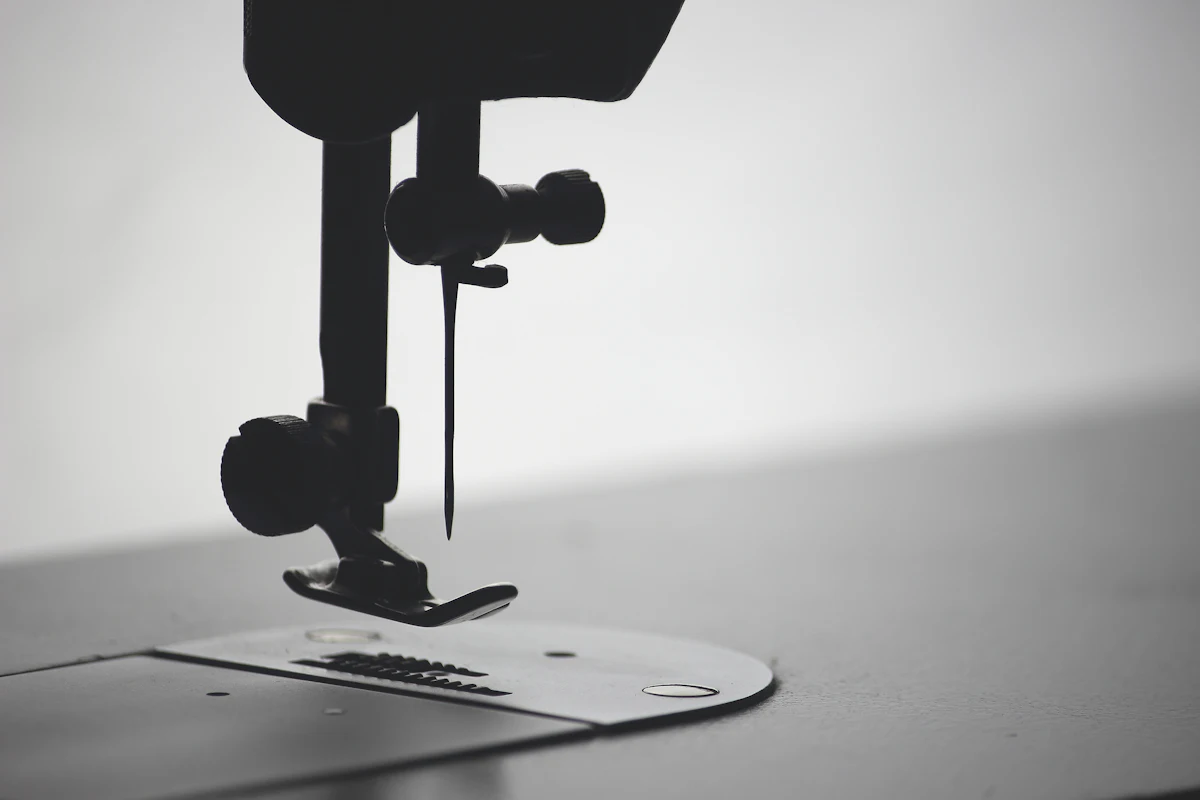
The thread should sit snugly in the needle’s front groove. Too thick a thread in a small needle frays and breaks; too fine a thread in a big needle can cause skipped stitches. Topstitching thread needs a topstitch needle or a larger size.
Industrial needle systems in the trade
Workrooms use many systems, for example DBx1 (common for lockstitch), DCx27 and B27 (common for overlockers) and others for coverstitch and specialist machines. Leicester’s knitwear and garment factories rely on the right system and point for each knitted fabric to avoid damaging loops.
Where to buy
Needles from brands such as Groz-Beckert, Organ and SCHMETZ are stocked by specialist dealers. PK Sewing Machines in Leicester carries domestic, industrial, embroidery and overlock needle systems; see our parts guide. Leicester’s knitwear factories, part of the city’s hosiery heritage, still get through needles by the thousand.
Last updated: 14 October 2026


