Nathaniel Corah
Nathaniel Corah was born in 1777 and trained as a framesmith. He built a business buying hosiery from local makers and selling it in Birmingham, and in the 1820s began moving towards factory production. His sons joined in 1830, creating N. Corah & Sons.
Building St Margaret’s Works
In 1865 the foundation stone of St Margaret’s Works was laid on a large site beside St Margaret’s Church. The firm took the image of St Margaret as its trademark, one of the earliest registered trademarks for knitted goods.
A national supplier
Corah exhibited at the 1851 Great Exhibition and became a supplier to Marks & Spencer from 1926. Employment peaked at several thousand people around the late 1960s, making it one of the largest single-site hosiery works anywhere.

The end of an era
In the late 1980s the company passed out of the founding family’s hands. Its story is remembered through archives and oral histories, and in the buildings that still stand in the city.
A factory town within a city
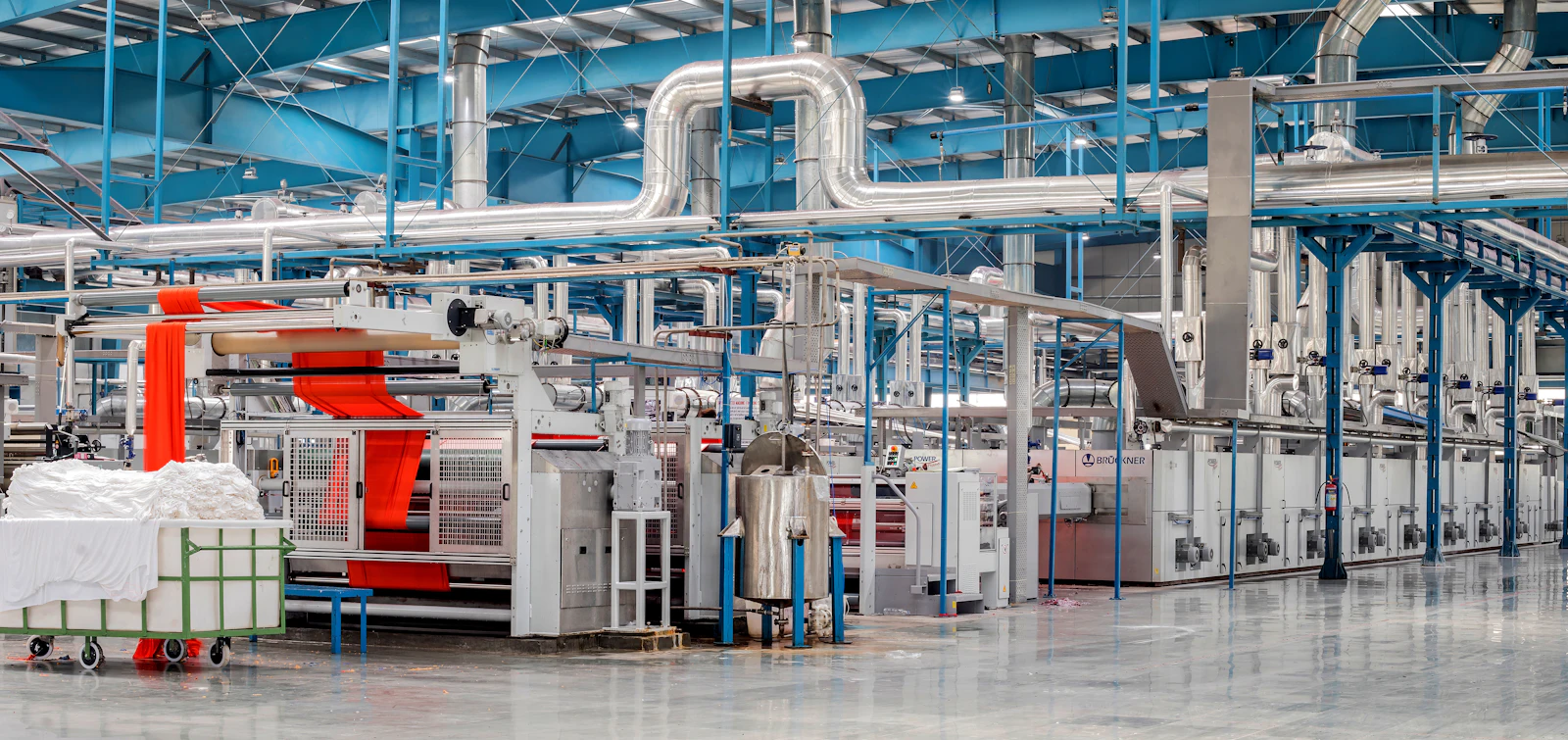
At its height, St Margaret’s Works was a self-contained world of knitting rooms, making-up rooms, warehouses and offices. Many Leicester families had several generations working there, and oral history projects have recorded their memories.
The St Margaret trademark
Corah adopted St Margaret, the saint of the church beside the works, as its trademark. It was one of the earliest registered trademarks for knitted goods, a sign of how brands were becoming important in Victorian retailing.

Working at Corah
Oral histories from former employees describe a large, busy workplace with its own social life, sports and clubs, where families often worked together across generations. These recollections are preserved by projects such as the University of Leicester’s East Midlands Oral History Archive and Knitting Together.
What survives today
The St Margaret’s Works buildings and the wider factory landscape of Leicester remind visitors of the scale of the industry. Walking the area around St Margaret’s Church gives a sense of how close the mills were to the city centre.
Leicester’s machinery tradition
Factories like Corah’s depended on skilled mechanics. That tradition lives on with local specialists such as PK Sewing Machines. See Leicester’s hosiery heritage for more firms and museums.
Last updated: 14 October 2026


